FAQ: Is a CT scan cheaper—or just as good—as an MRI?
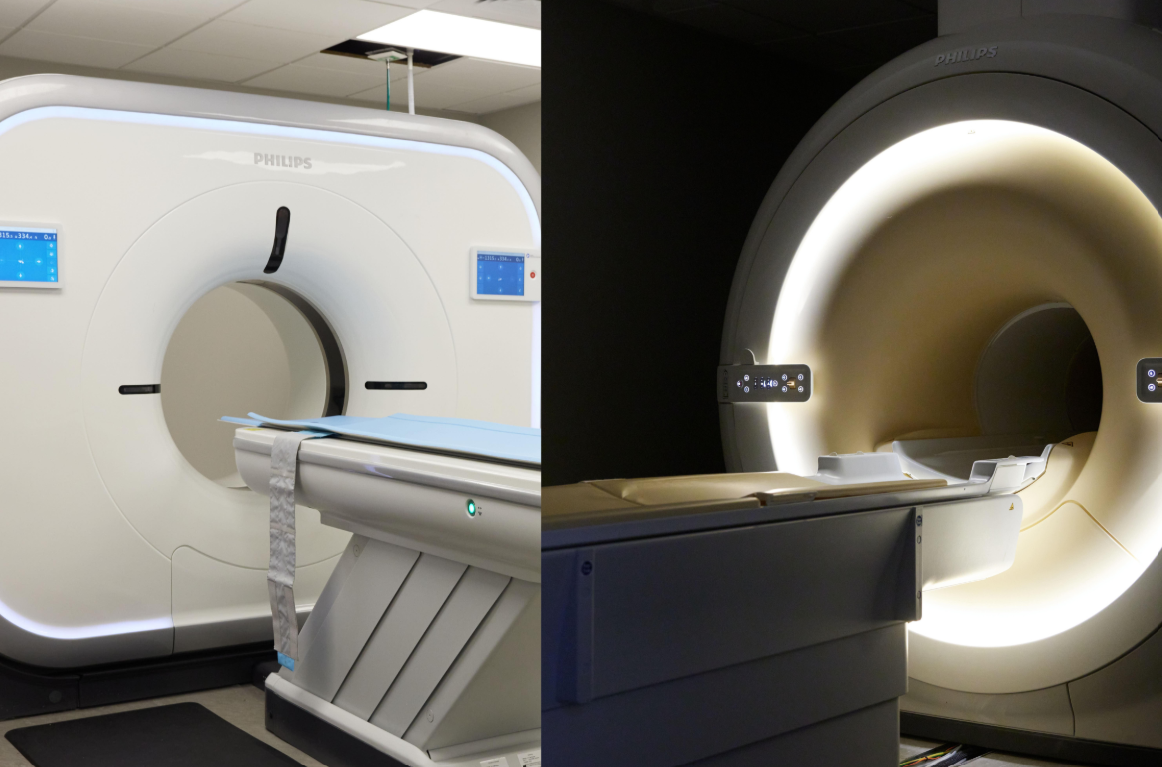
Side-by-side view of CT (left) and MRI (right) scanners used in advanced veterinary diagnostic imaging.
CT and MRI are both powerful imaging tools, but they serve very different purposes.
CT (computed tomography) uses X-rays to create detailed 3D images of the body and is especially effective for evaluating bone structures, sinuses, and certain types of chest or abdominal conditions.
MRI (magnetic resonance imaging), on the other hand, uses magnetic fields—not radiation—to produce highly detailed images of soft tissues, such as the brain, spinal cord, muscles, and joints. MRI is also the preferred choice for neurological disorders, cancer staging, and investigating complex orthopedic or soft tissue injuries.
While CT scans are generally less expensive and faster to perform, they don’t always provide the level of detail needed for certain diagnoses. Some facilities rely primarily on CT because that’s the equipment they have available—but in many cases, an MRI can offer a far clearer, more definitive result.
Choosing the right scan depends on your pet’s condition, the questions your veterinarian needs answered, and the type of tissue being studied.