MRI vs CT for Dogs: Which Scan Does Your Pet Need?

Advanced imaging can help identify underlying causes of neurological, orthopedic, and other complex health conditions in dogs of all breeds and sizes.
When your veterinarian recommends advanced imaging for your dog, one of the first questions you may have is, "Do they need an MRI or a CT scan?"
Both MRI and CT are powerful diagnostic tools, but they are used for different purposes. Understanding how each works—and when veterinarians choose one over the other—can help you feel more confident in your dog’s care.
What Is the Difference Between MRI and CT?
MRI (Magnetic Resonance Imaging) and CT (Computed Tomography) both create detailed images of the inside of the body, but they use different technology and are best suited for different types of conditions.
MRI uses magnetic fields and radio waves, while
CT uses X-rays to create cross-sectional images.
The key difference comes down to what each scan shows best.
MRI excels at imaging soft tissues
CT excels at imaging bone and dense structures
When Dogs Typically Need an MRI
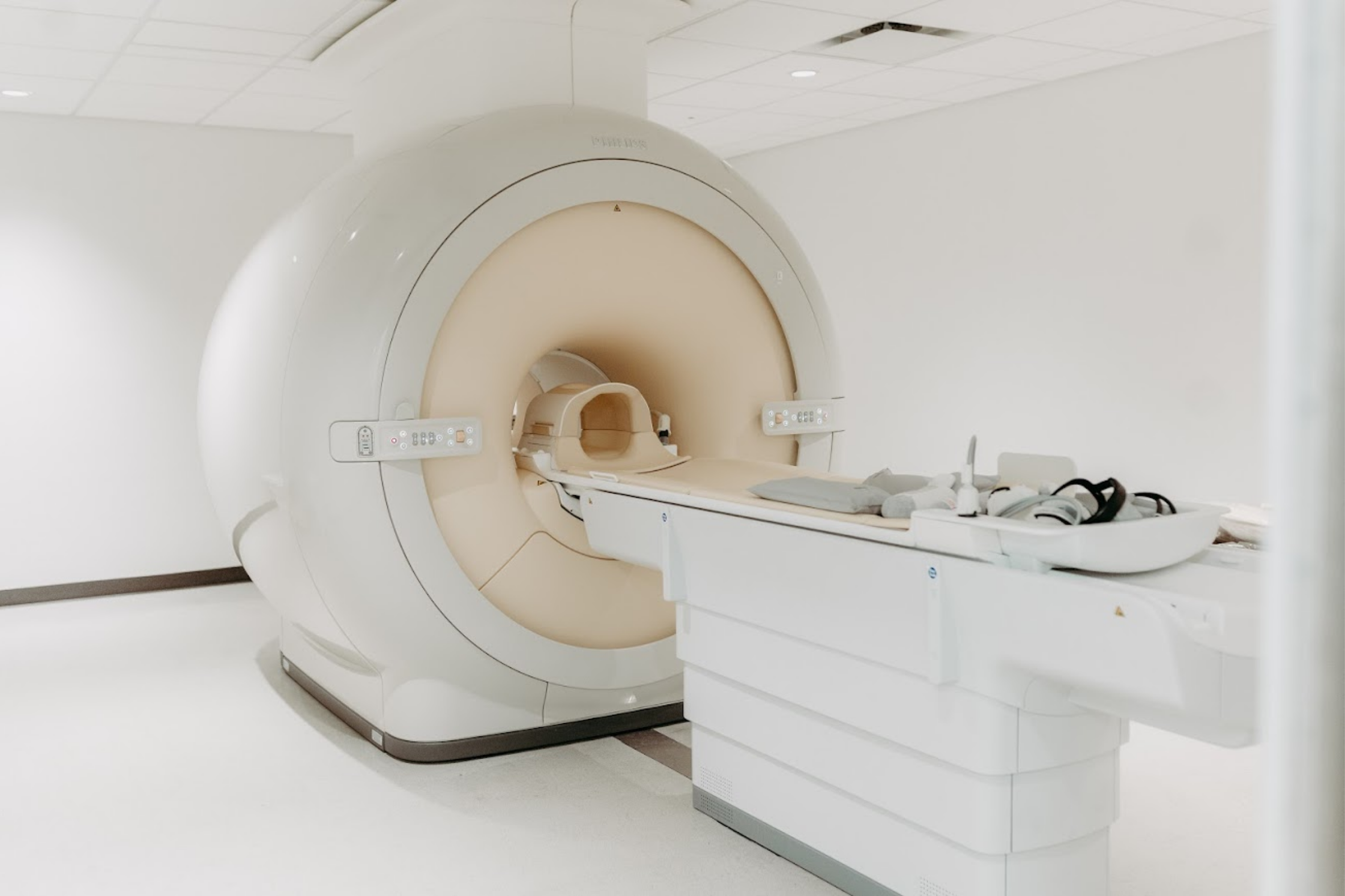
High-field MRI technology provides detailed images of soft tissues, helping veterinarians diagnose neurological and complex medical conditions with greater precision.
MRI is the preferred imaging method when veterinarians need to evaluate the brain, spinal cord, or nervous system.
Your veterinarian may recommend an MRI if your dog has:
Seizures or neurological symptoms
Sudden weakness or paralysis
Neck or back pain
Difficulty walking or loss of coordination
Suspected intervertebral disc disease (IVDD)
Possible brain tumors or inflammation
MRI provides extremely detailed images of soft tissues, making it the best tool for diagnosing many neurological conditions.
When Dogs Typically Need a CT Scan
CT scans are often used when veterinarians need to evaluate bones, lungs, or certain types of masses.
Your veterinarian may recommend CT if your dog has:
Nasal disease or chronic sinus issues
Suspected tumors in the chest or abdomen
Lung disease
Complex fractures or orthopedic injuries
Dental disease below the gum line
Trauma from accidents
CT scans are fast and provide excellent detail for structures that are dense or require 3D visualization.
MRI vs CT: Key Differences
While both imaging tools are highly advanced, they serve different roles in veterinary medicine.
MRI
Best for soft tissues (brain, spinal cord, nerves)
Provides higher detail for neurological conditions
Typically takes longer to perform
Requires anesthesia
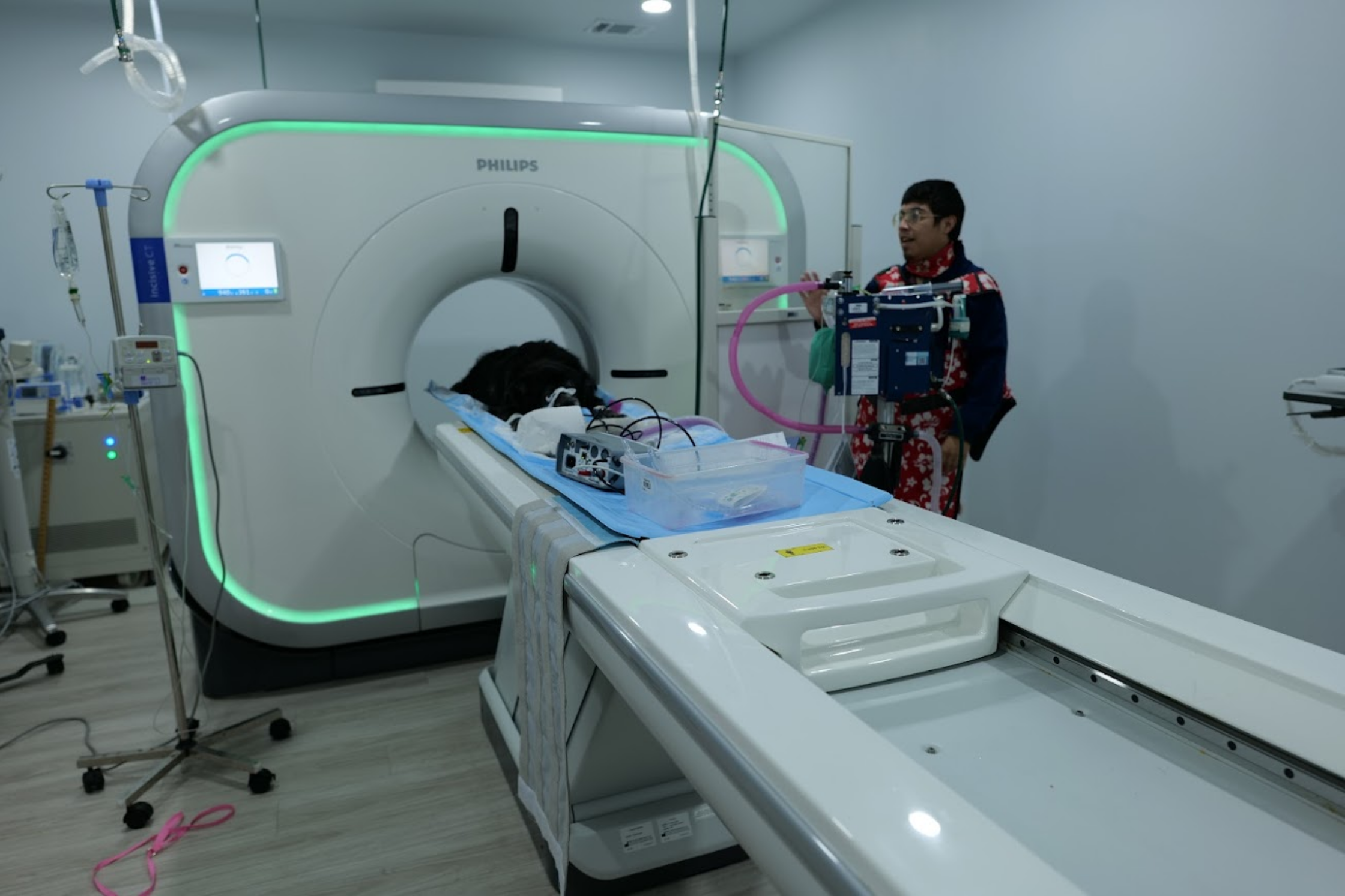
CT imaging allows veterinarians to quickly capture detailed cross-sectional images, helping diagnose injuries, tumors, and other complex conditions with speed and accuracy.
CT
Best for bones, lungs, and certain tumors
Extremely fast imaging
Often used in emergency or trauma cases
May require sedation or anesthesia
Why Your Veterinarian Chooses One Over the Other
The decision between MRI and CT is based on your dog’s symptoms and the area of the body being evaluated.
For example:
A dog with seizures → MRI is usually recommended
A dog with a nasal tumor → CT is often preferred
A dog with back pain → MRI may be needed to evaluate the spinal cord
A dog with trauma → CT may be used for rapid assessment
In some cases, both MRI and CT may be used together to provide a complete picture of a condition.
Does My Dog Need Anesthesia?
In most cases, yes.
Both MRI and CT require pets to remain still during imaging to ensure clear, accurate results.
MRI always requires anesthesia
CT may require sedation or anesthesia depending on the study
Your pet is carefully monitored throughout the procedure to ensure safety.
Why Imaging Quality Matters
Not all MRI and CT scanners provide the same level of detail.
Higher-end imaging systems, such as:
3T MRI for soft tissue imaging
128-slice CT for fast, high-resolution scans
can significantly improve diagnostic accuracy.
Better imaging quality helps veterinarians:
Detect problems earlier
Reduce the need for repeat scans
Make more confident treatment decisions
A Collaborative Approach to Diagnosis

Sage Veterinary Imaging provides advanced outpatient MRI, CT, and ultrasound services for veterinarians and pet families throughout Utah.
Advanced imaging is typically performed at a specialized facility like Sage Veterinary Imaging, where the focus is on diagnostic accuracy and efficiency.
The imaging team works closely with your veterinarian by:
Performing the scan
Providing expert interpretation by a board-certified radiologist
Communicating results quickly
Your veterinarian then uses this information to guide your dog’s treatment plan.
Helping You Make the Right Decision
Choosing between MRI and CT isn’t something pet owners need to decide alone. Your veterinarian will recommend the most appropriate imaging based on your dog’s condition and medical history.
What matters most is ensuring your dog receives the right test at the right time, using high-quality imaging that provides clear and accurate answers.
At Sage Veterinary Imaging, advanced MRI and CT technology helps veterinarians diagnose complex conditions and guide effective treatment—so your dog can get the care they need as quickly as possible.