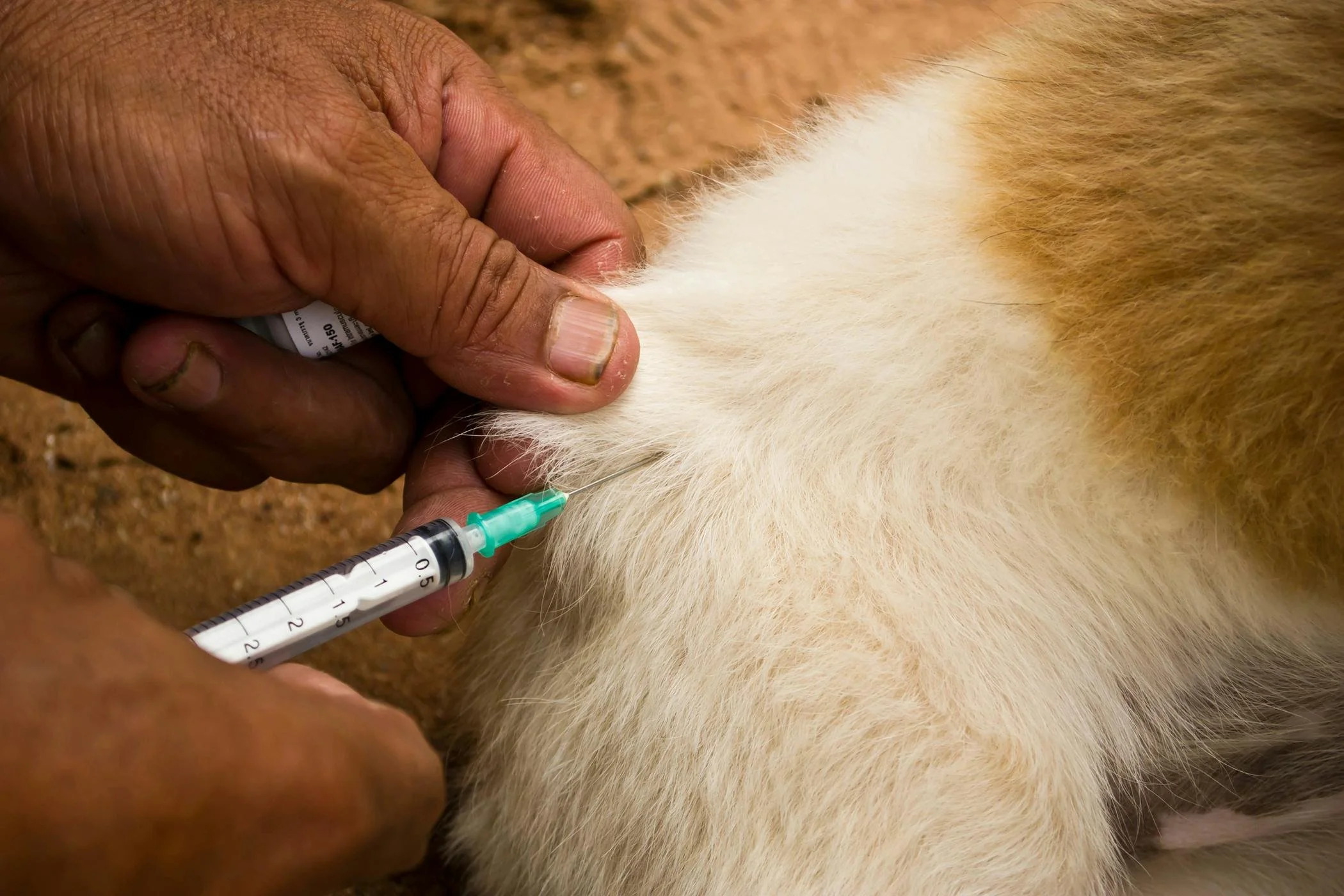
Fine needle aspiration allows veterinarians to collect diagnostic tissue samples using minimally invasive techniques.
When pets need answers about a suspicious mass, abnormal tissue, or internal illness, veterinarians often recommend advanced diagnostic testing beyond standard imaging alone. At Sage Veterinary Imaging in Round Rock, Texas, image-guided biopsy procedures help veterinarians throughout the Austin area obtain precise tissue samples using advanced ultrasound and CT imaging technology.
These minimally invasive procedures help diagnose conditions such as cancer, liver disease, kidney abnormalities, enlarged lymph nodes, and soft tissue masses while reducing the need for exploratory surgery.
What Is an Image-Guided Biopsy?
An image-guided biopsy is a procedure that uses advanced imaging technology—such as ultrasound or CT scanning—to guide a needle precisely to the area being sampled.
This technique allows veterinarians to obtain tissue samples from locations that might otherwise require surgery to reach.
Common types of image-guided procedures include:
Ultrasound-guided biopsy
Ultrasound-guided fine needle aspiration (FNA)
CT-guided biopsy
By visualizing the needle in real time, veterinarians can target abnormal tissue accurately while avoiding surrounding structures.
Why Veterinarians Recommend Biopsy
A biopsy helps veterinarians determine the exact cause of a mass or abnormal tissue. Imaging alone can show that something unusual is present, but laboratory analysis of tissue samples is usually required to identify the condition.
Veterinarians may recommend a biopsy when imaging reveals:
A suspicious mass or tumor
Enlarged lymph nodes
Abnormal liver or kidney tissue
Lung masses or chest abnormalities
Soft tissue tumors
Unexplained internal changes
Once a sample is collected, it is sent to a pathology laboratory where specialists examine the cells under a microscope.
How Image-Guided Biopsy Works
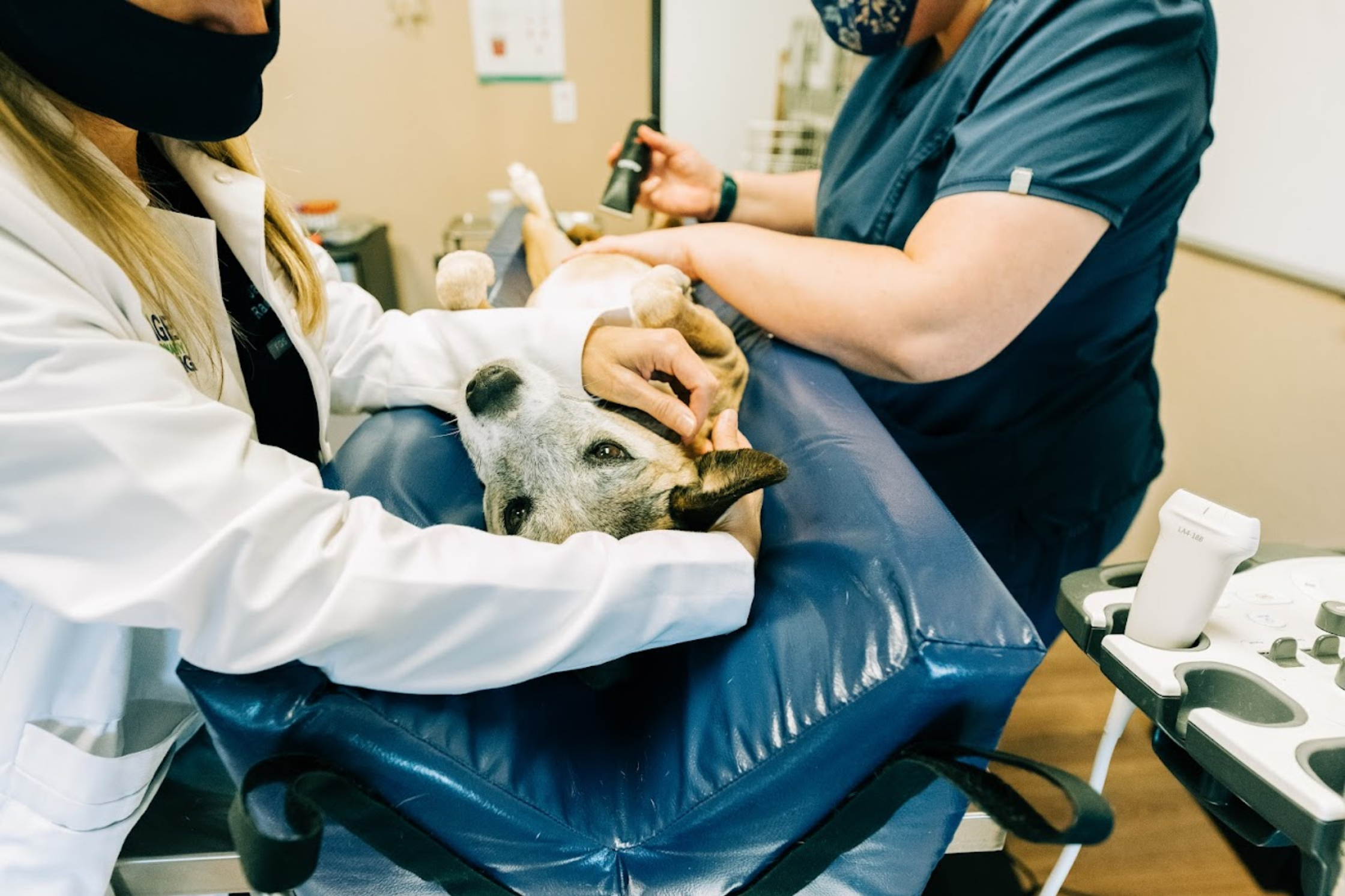
Veterinary specialists perform an ultrasound-guided diagnostic procedure for a dog at Sage Veterinary Imaging in Round Rock, Texas.
Image-guided biopsy procedures are designed to be minimally invasive and highly precise.
The process typically includes several steps.
Pre-procedure evaluation
Your veterinarian and the imaging team review your pet’s medical history and imaging results to determine the safest approach for sampling.
Sedation or anesthesia
Many pets receive sedation or light anesthesia so they remain comfortable and still during the procedure.
Imaging guidance
Using ultrasound or CT imaging, the veterinarian identifies the exact location of the tissue that needs to be sampled.
Tissue collection
A small needle is guided to the target area and tissue samples are collected.
Laboratory analysis
The samples are submitted to a veterinary pathology laboratory to determine the type of cells present and provide a definitive diagnosis.
Advantages of Image-Guided Biopsy
Image-guided biopsy offers several important benefits compared to traditional surgical biopsy procedures.
Advantages include:
Minimally invasive approach
Faster recovery time for pets
Precise targeting of abnormal tissue
Reduced risk compared to exploratory surgery
Rapid diagnostic information for veterinarians
In many cases, pets can return home the same day after the procedure.
Where to Get Image-Guided Biopsy Near Austin
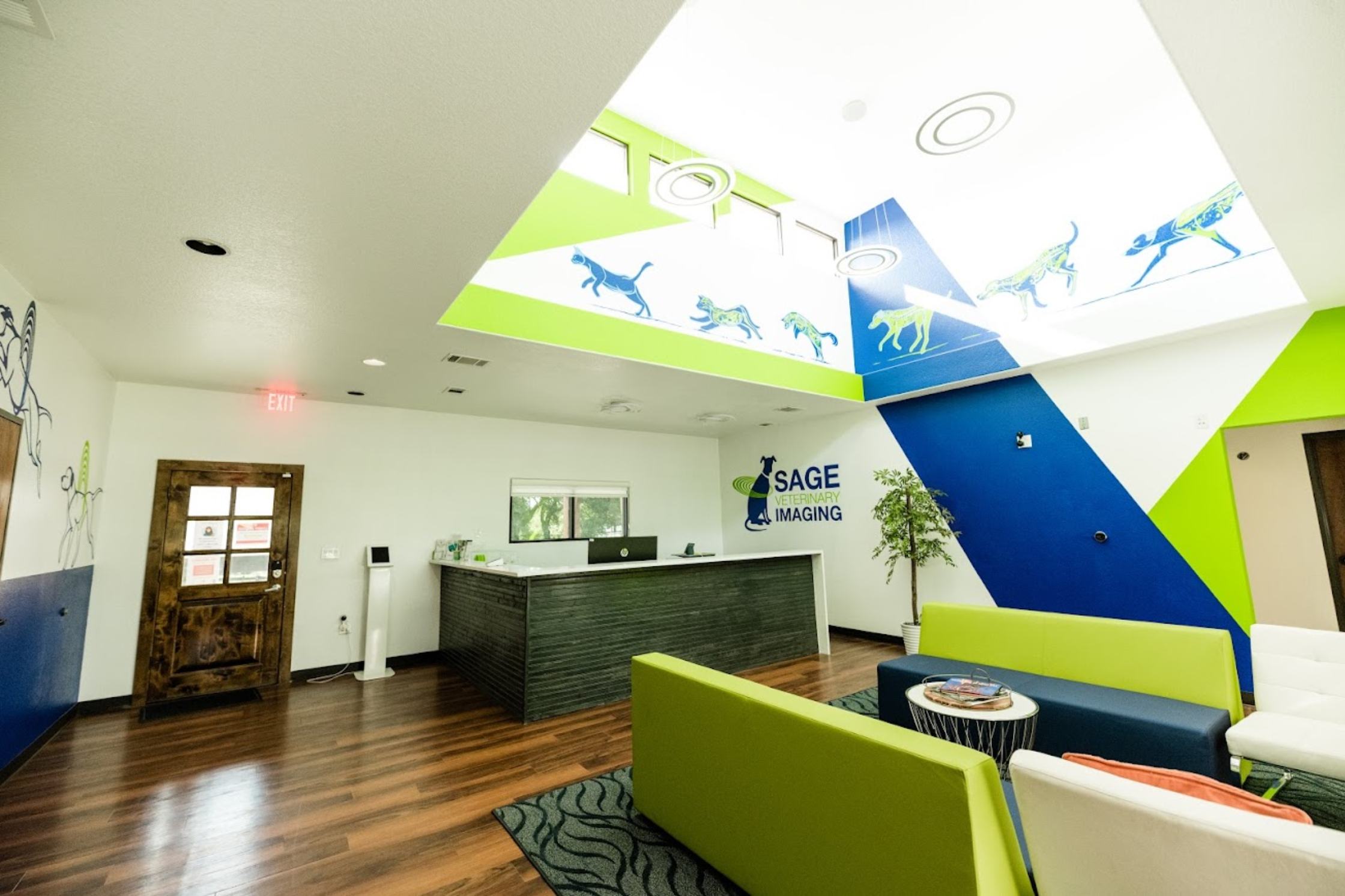
The Sage Veterinary Imaging facility in Round Rock provides advanced outpatient diagnostic imaging services for pets throughout the Austin area.
Veterinarians throughout the Austin metropolitan area frequently refer patients to Sage Veterinary Imaging in Round Rock when advanced imaging or biopsy procedures are needed.
The Round Rock facility is conveniently located for pet owners traveling from communities including:
Round Rock
Austin
Cedar Park
Georgetown
Pflugerville
Leander
Kyle
Buda
San Marcos
This central location allows pets across Central Texas to access advanced diagnostic procedures without traveling far outside the region.
Conditions Image-Guided Biopsy Can Help Diagnose
Image-guided biopsy is often used when veterinarians need a definitive diagnosis for abnormal tissue or masses.
Conditions that may require biopsy include:
Cancer or suspected tumors
Liver disease
Kidney disease
Enlarged lymph nodes
Lung masses
Soft tissue tumors
Because biopsy provides cellular-level information, it is one of the most reliable ways to determine the exact nature of a disease.
A Collaborative Approach with Your Veterinarian
Sage Veterinary Imaging operates as a dedicated outpatient diagnostic imaging center, working closely with veterinarians across Central Texas.
The imaging team provides advanced diagnostic procedures such as MRI, CT scans, ultrasound, and image-guided biopsy, while your primary veterinarian continues managing your pet’s overall care and treatment plan.
This collaborative approach allows pets to receive specialized diagnostics while maintaining continuity with their regular veterinarian.
Advanced Diagnostic Imaging in Round Rock Texas
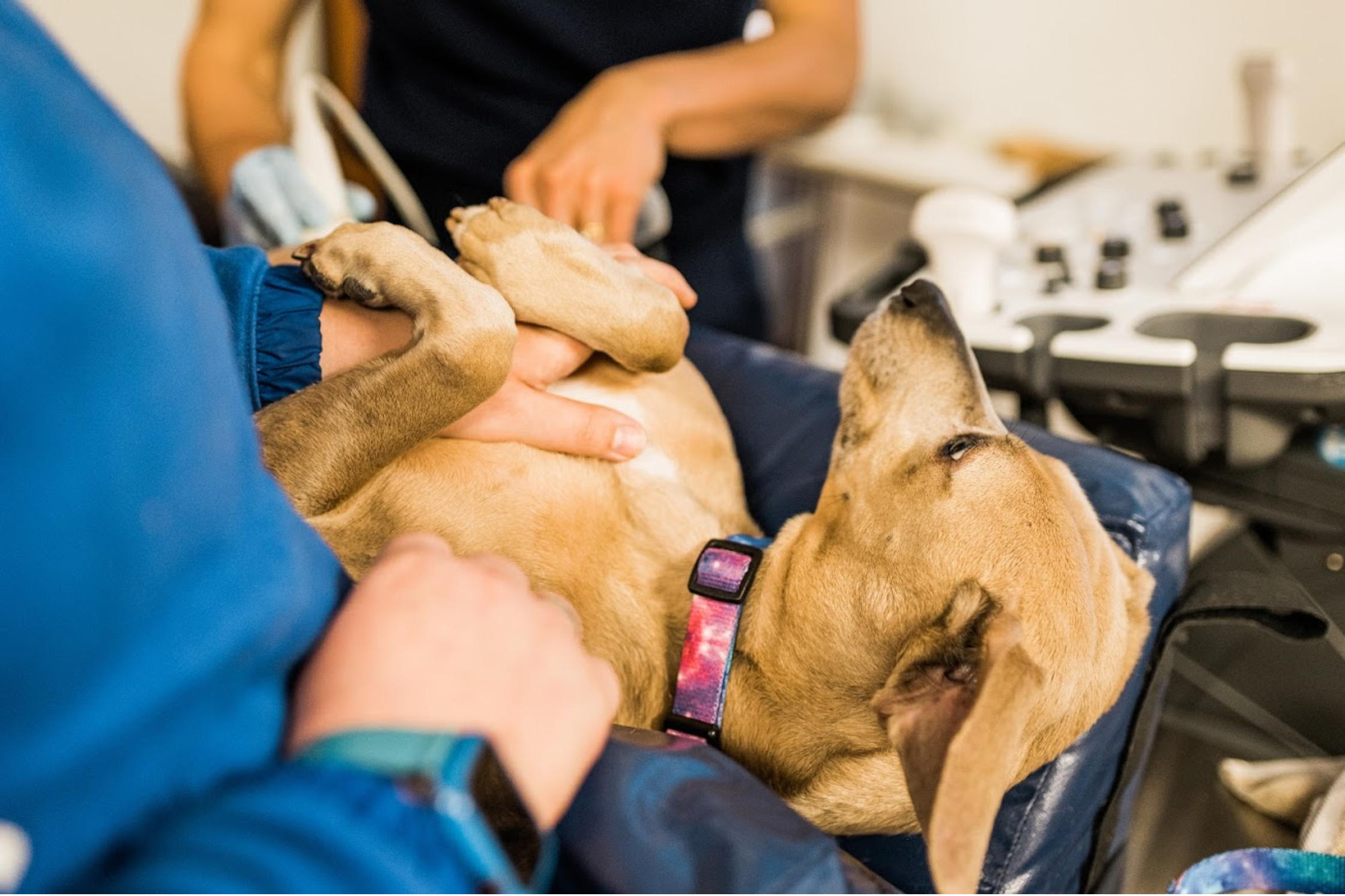
A dog receives advanced ultrasound imaging as part of a minimally invasive diagnostic evaluation at Sage Veterinary Imaging.
In addition to image-guided biopsy procedures, Sage Veterinary Imaging provides advanced veterinary MRI, CT scans, ultrasound, and fluoroscopy services for pets throughout Central Texas.
Veterinarians across Round Rock, Austin, Cedar Park, Georgetown, Pflugerville, Leander, Kyle, Buda, and surrounding communities refer patients for specialized diagnostic imaging that helps guide treatment decisions quickly and accurately.
Helping Pets Get Clear Answers
When a veterinarian identifies an abnormal mass or internal change, obtaining an accurate diagnosis is critical for determining the best treatment plan.
At Sage Veterinary Imaging in Round Rock, our team focuses on delivering precise diagnostic imaging and minimally invasive procedures that help veterinarians and pet families move forward with confidence.
If your veterinarian recommends an image-guided biopsy, advanced diagnostic care is available locally in Round Rock to help provide the answers your pet needs.
Frequently Asked Questions About Image-Guided Biopsy for Pets
Does my pet need anesthesia for a biopsy?
Many pets receive light sedation or anesthesia to keep them comfortable and still during the procedure. Your veterinarian and imaging team will determine the safest approach for your pet.
Is an image-guided biopsy safer than surgery?
In many cases, image-guided biopsy is less invasive than exploratory surgery because it allows veterinarians to collect tissue samples through a needle rather than a surgical incision.
How long does it take to get biopsy results?
Biopsy samples are typically sent to a veterinary pathology laboratory, and results are often available within several business days depending on the type of testing required.
What conditions can a biopsy diagnose?
Biopsies may help diagnose cancer, inflammatory disease, liver disease, kidney disease, lung abnormalities, enlarged lymph nodes, and other internal conditions.