Understanding Chiari Malformation in Cavalier King Charles Spaniels

Even active, healthy-looking Cavaliers may have Chiari malformation without obvious symptoms
There’s a paradox at the heart of veterinary medicine: some of the most serious diseases can present with the most subtle signs.
Nowhere is that more true than with Chiari-like malformation (CM) and its frequent companion, syringomyelia (SM)—conditions we diagnose regularly at Sage Veterinary Imaging, especially in Cavalier King Charles Spaniels.
Despite how common this disease is in the breed, its early clinical signs are often overlooked, misattributed to dermatologic or behavioral causes, or dismissed as quirks of personality.
As veterinary imaging specialists, we see the other side of this story. We see the MRIs that reveal what’s happening inside: the herniation of the cerebellum, the distortion of the spinal cord, and the abnormal buildup of cerebrospinal fluid. Our role is to bridge that invisible gap between unexplained symptoms and an accurate diagnosis, and most importantly, a plan.
What Is Chiari-Like Malformation?
Chiari-like malformation is a developmental defect of the skull and craniocervical vertebrae.
In dogs with CM, the skull is often too small to accommodate the brain, especially in the back of the head where the cerebellum is housed. This mismatch forces part of the cerebellum to herniate through the foramen magnum (the opening at the base of the skull), compressing the brainstem and obstructing the normal flow of cerebrospinal fluid (CSF).
This disruption leads to the accumulation of CSF within the spinal cord itself, forming fluid-filled cavities called syrinxes—a condition known as syringomyelia.
The result? Chronic, often severe neuropathic pain, and in some cases, progressive neurologic dysfunction.
A Hidden Epidemic in Cavaliers
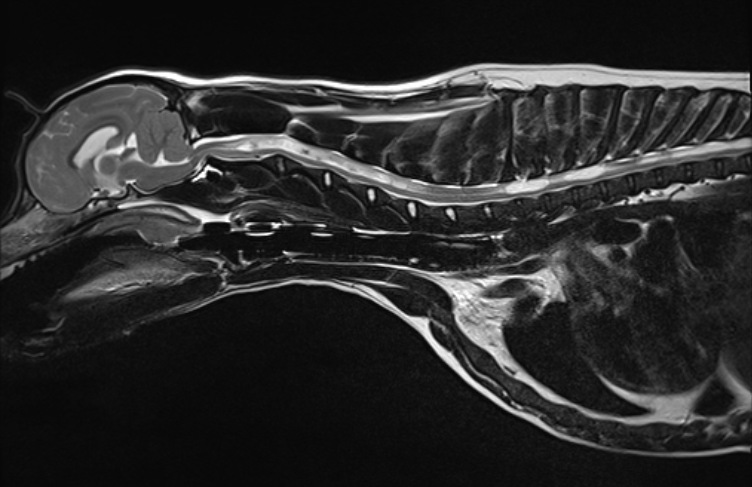
MRI is the gold standard for diagnosing Chiari malformation and syringomyelia in dogs. Photo courtesy: Fitzpatrick Referrals
Chiari-like malformation is genetically inherited and extraordinarily common in Cavaliers.
Conservative estimates suggest that up to 95% of CKCS have CM changes on MRI by age 6, and 50–70% develop syringomyelia.
Not all affected dogs will show clinical signs, but when they do, they’re often misunderstood.
The average age of onset is between 3 and 6 years, though signs can appear as early as 6 months or as late as 12 years. And there’s there's no sex predilection.
How to Recognize Chiari Malformation Symptoms in Cavaliers
The early signs of CM/SM are notoriously nonspecific and easy to overlook.
Dogs may seem normal during a routine physical exam, and many neurological deficits won’t manifest until the disease is more advanced. However, some hallmark behaviors can offer important clues:
Phantom scratching (scratching at the neck or shoulder without touching the skin)
Unprovoked vocalizations (yelping or whining for no apparent reason)
Reluctance to jump or climb stairs
Sensitivity when touched around the head, neck, or ears
Worsening signs at night or during excitement
Abnormal postures (preferring to sleep with the head elevated, for example)
Pain is the most consistent symptom, especially pain that seems to appear without a trigger. Some dogs will rub their faces, lick their limbs excessively, or develop side-specific behaviors (e.g., scratching on one side only). Others may become withdrawn, less playful, or unwilling to be touched.
In more advanced cases, ataxia, weakness, scoliosis, cranial nerve deficits, or even seizures may occur. However, these signs are far less common than the vague, chronic discomfort that marks early CM/SM.
What an MRI Can Reveal About Your Cavalier’s Health
Prior to the availability of MRI, diagnosing CM and SM was nearly impossible in veterinary medicine.
Today, MRI remains the gold standard, and at Sage Veterinary Imaging, it’s the cornerstone of our approach.
The high-field MRI system at SVI allows us to:
Visualize cerebellar herniation and crowding at the foramen magnum
Detect syrinx formation throughout the spinal cord
Assess the degree of ventriculomegaly, medullary kinking, and atlanto-occipital overlap
Evaluate CSF flow disruption, which is key to understanding clinical progression
We often recommend imaging both the brain and the full cervical spine. In some cases, full spinal cord imaging may be warranted, especially if syrinxes are suspected caudally.
Treatment Options for Chiari Malformation and Syringomyelia
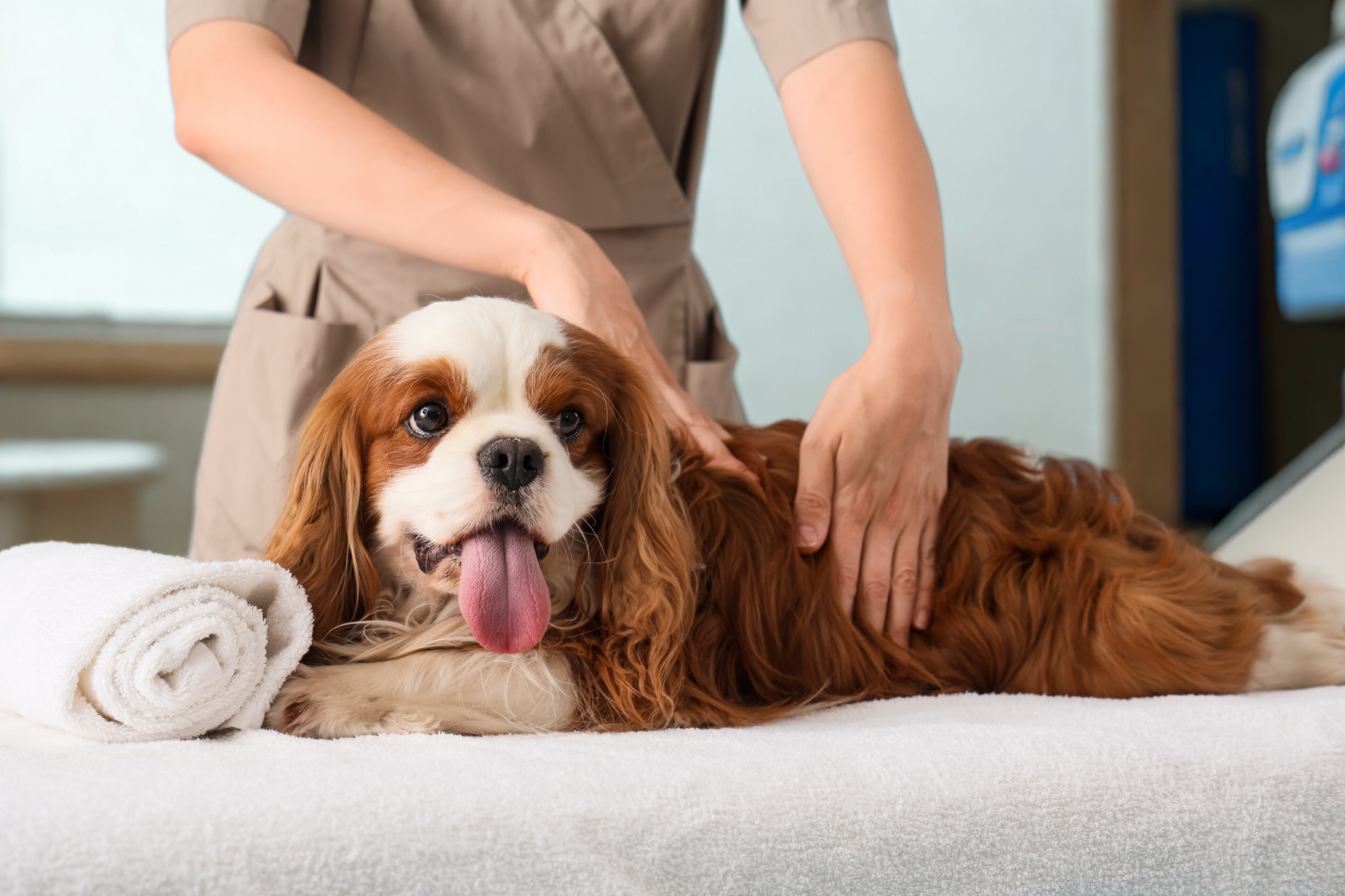
Gentle handling and pain management are essential for dogs with Chiari-like malformation.
Treatment depends on the severity of clinical signs, extent of syringomyelia, and response to medications. There’s no cure for CM/SM, but both medical and surgical options can dramatically improve quality of life.
Medical therapy focuses on two goals:
Reducing neuropathic pain
Decreasing CSF production and pressure
A multimodal drug approach is typically most effective. Common medications include:
Gabapentin or pregabalin for neuropathic pain
NSAIDs (e.g., carprofen, firocoxib) for inflammation
Corticosteroids (e.g., prednisone) for acute flare-ups
Omeprazole or cimetidine to reduce CSF pressure
Amantadine for pain modulation
It should be noted: Not all dogs require long-term medication. Those with mild, infrequent signs may be monitored. Others may need increasing doses over time, especially as the disease progresses.
Is Surgery Necessary for Chiari Malformation in Dogs?
Surgery is reserved for:
Dogs with severe or worsening signs
Dogs with large syrinxes (typically >3 mm)
Cases that fail medical management
The most common surgery is foramen magnum decompression (FMD). This involves removing bone at the back of the skull and top of C1 vertebra to relieve pressure and restore CSF flow. Some surgeons also perform duraplasty or cranioplasty to reduce recurrence.
Success rates are high. 80–94% of dogs improve postoperatively, but about 50% may relapse within 1–2 years. Surgery doesn't reverse existing syrinxes, but it can halt progression and alleviate pain in many cases.
Prognosis and Quality of Life
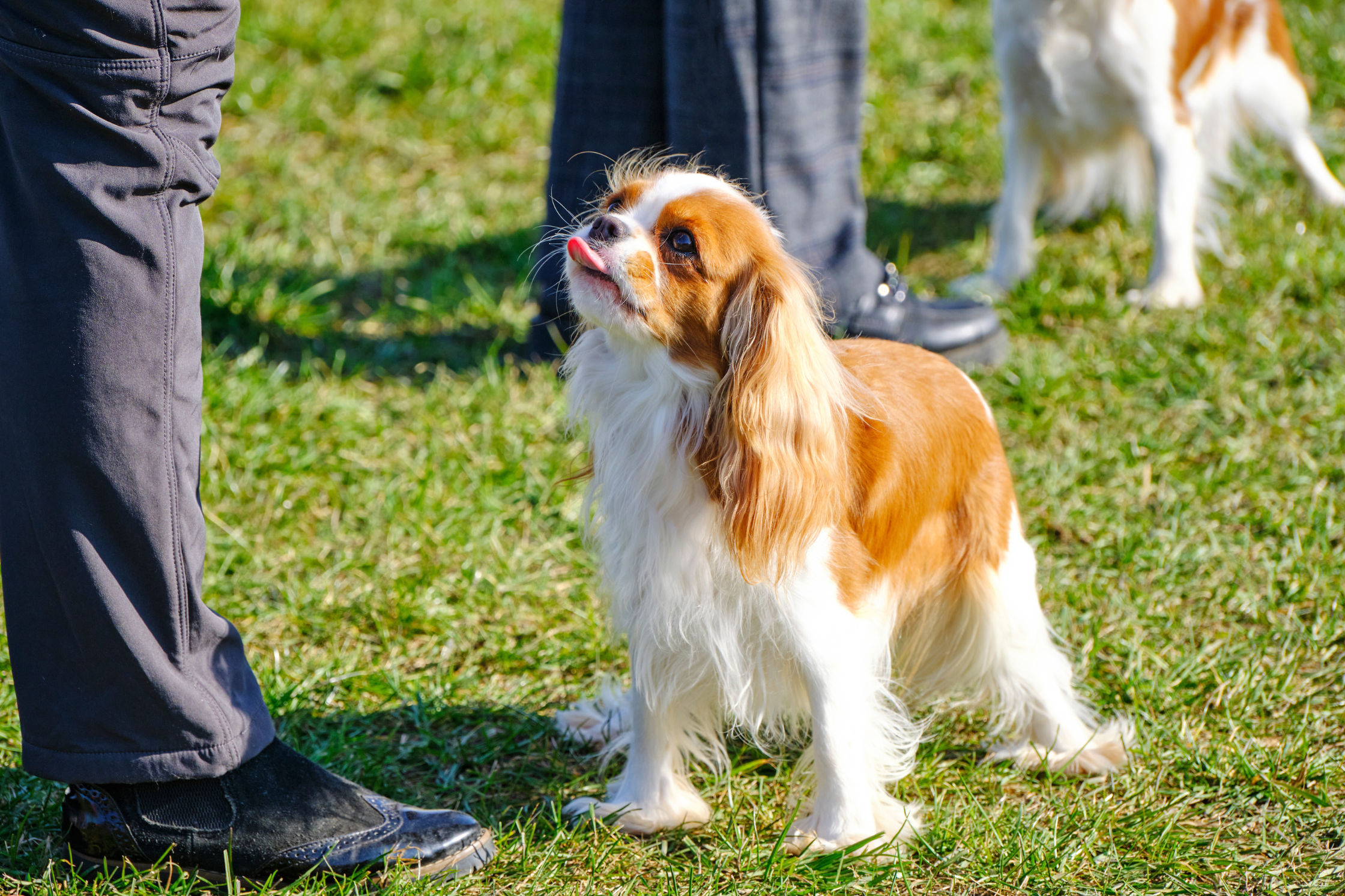
With early diagnosis and care, many dogs with Chiari malformation enjoy a good quality of life.
Chiari-like malformation and syringomyelia are not fatal, but they can be debilitating if untreated. With early intervention, whether medical or surgical, most dogs can maintain a good quality of life.
Lifelong management is typical, and symptoms may fluctuate over time. Importantly, earlier diagnosis generally leads to better outcomes.
At Sage Veterinary Imaging, we take a proactive stance: identifying CM/SM before pain becomes unmanageable allows us to tailor care for both the dog and their family.
Final Thoughts from the Sage Team
Chiari-like malformation and syringomyelia are invisible diseases, unless you know where to look.
As advanced imaging specialists, we’re uniquely equipped to make the invisible visible.
If you’re seeing subtle changes in your Cavalier King Charles Spaniel, or if you simply want clarity about what’s happening beneath the surface, we’re here to help. Our goal is not just diagnosis, but peace of mind and a personalized plan to improve your dog’s comfort and quality of life.
Your dog deserves answers. We’re here to find them.
For more information about MRI evaluations at Sage Veterinary Imaging, or to schedule a consultation, please contact us.