What Pet Parents Need to Know About Veterinary MRI But Rarely Hear (2026 Update)
Editor’s Note:
This article is an updated version of “The Pet Owner’s Guide to MRI,” originally published in May 2023. It has been revised and expanded for 2026 to reflect current MRI technology, updated pricing transparency, and the expansion of Sage Veterinary Imaging’s services across Texas and Utah.
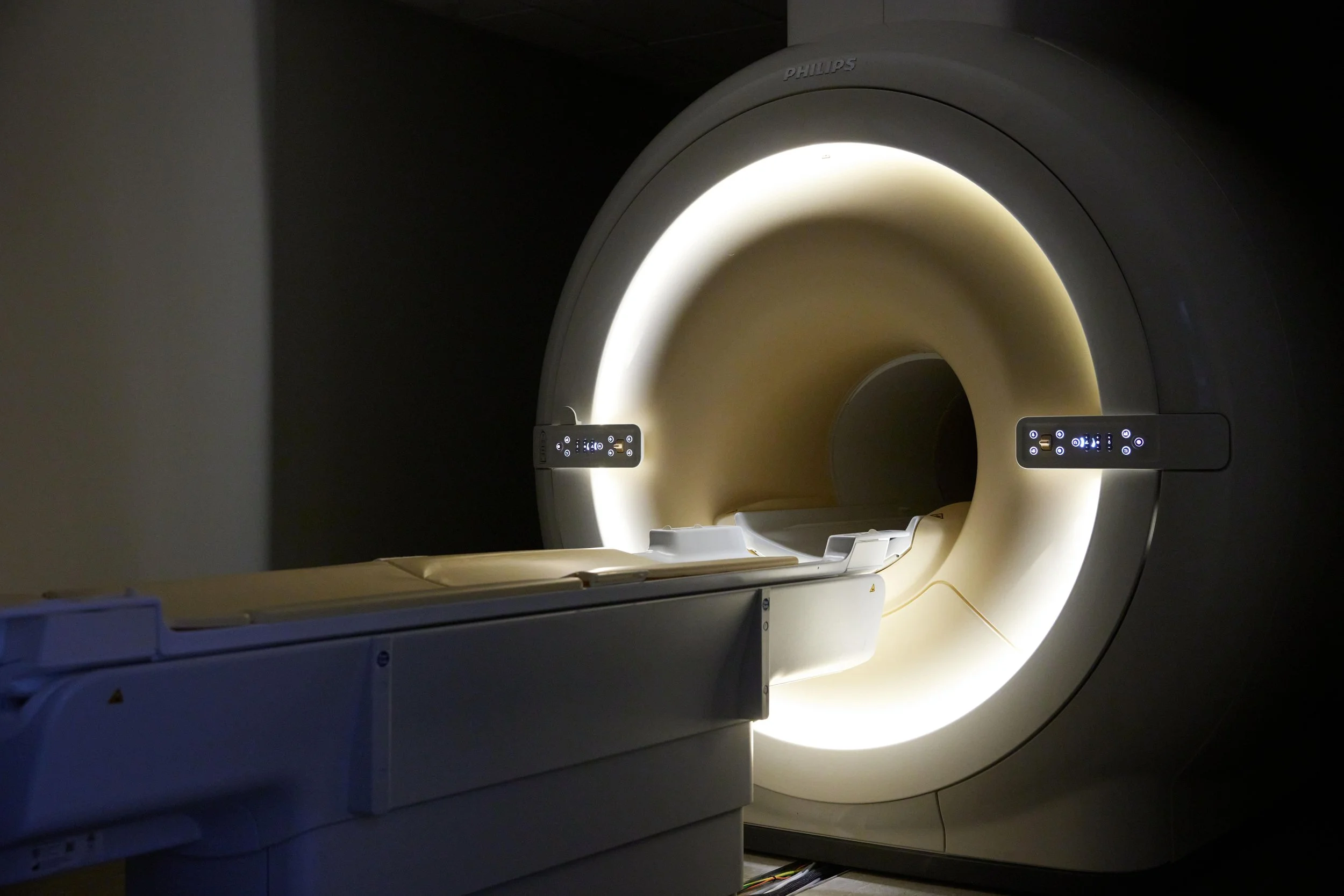
The 3T MRI at Sage Veterinary Imaging is a human-quality diagnostic imaging machine, the same model and power used in human hospitals.
When your veterinarian recommends an MRI for your pet, it’s normal to feel anxious or uncertain. You might be wondering what it involves, whether it’s safe, or if it will really give you the answers you need.
At Sage Veterinary Imaging (SVI), we’ve guided thousands of families through this exact moment. We believe that when pet parents understand what MRI is, why it’s important, and what to expect, the entire experience becomes less intimidating, and far more empowering.
What is an MRI for Pets, Really?
MRI stands for Magnetic Resonance Imaging. It’s a non-invasive, advanced imaging technique that uses a powerful magnetic field and radio waves to create incredibly detailed pictures of the inside of the body, especially soft tissues like the brain, spinal cord, muscles, and joints.
Unlike X-rays or CT scans, MRI doesn’t use radiation. Instead, it captures subtle details that other imaging tools can miss, such as inflammation, nerve damage, or early-stage tumors. It’s considered the gold standard for diagnosing many neurologic and orthopedic conditions in both human and veterinary medicine.
At SVI, our facilities in Texas and Utah feature 3 Tesla MRI scanners, the same high-field systems used in leading human hospitals, ensuring every scan provides the sharpest, most precise image possible.
When Veterinarians Recommend MRI
MRI is typically recommended when your vet needs more information than can be found through physical exams, bloodwork, or X-rays.
Common reasons include:
Seizures or sudden behavioral changes
Back pain, lameness, or difficulty walking
Facial droop, head tilt, or loss of balance
Suspected tumors or unexplained masses
Follow-up after surgery or injury
In short, MRI is used when something deeper may be going on and your vet needs a clear picture to confirm what’s happening. These scans often reveal issues that aren’t visible through other diagnostic tools, guiding the next step in your pet’s care.
Why Access to MRI for Pets Matters
Sage Veterinary Imaging exists to provide better access to high-quality, expert care for pets who are experience complex pain.
One of the biggest frustrations in veterinary medicine today is how difficult it can be to schedule an MRI when your pet needs one most. Many specialty hospitals have wait times of two to three weeks or require lengthy pre-consultations before scheduling.
When a pet is in pain or losing mobility, waiting that long simply isn’t acceptable. That’s why Sage Veterinary Imaging was founded: to provide same-day or next-day access to high-quality MRI imaging for pets.
Our outpatient model is built for speed, comfort, and clarity. We focus exclusively on diagnostic imaging, which means less waiting, less red tape, and faster answers so your veterinarian can make treatment decisions right away.
What to Expect During an MRI for Your Dog or Cat
Understanding what happens during the appointment can make the entire process much easier. Here’s what a typical visit looks like at SVI:
Arrival – Our team reviews your pet’s history, confirms details, and answers final questions before the scan.
Preparation – Your pet is gently prepared for anesthesia to ensure comfort and total stillness during imaging.
Monitoring – Technicians and anesthetists track vital signs continuously with surgical-grade equipment.
The Scan – The MRI typically lasts 30–60 minutes, depending on which area of the body is being imaged.
Recovery – After the scan, your pet rests in a calm, quiet space until fully awake and ready to go home.
Results – Preliminary results are communicated to you at the time you pick up your pet. Radiologists review images in real time and send final results to your veterinarian within 24 hours.
Safety and Anesthesia During Your Pet’s MRI
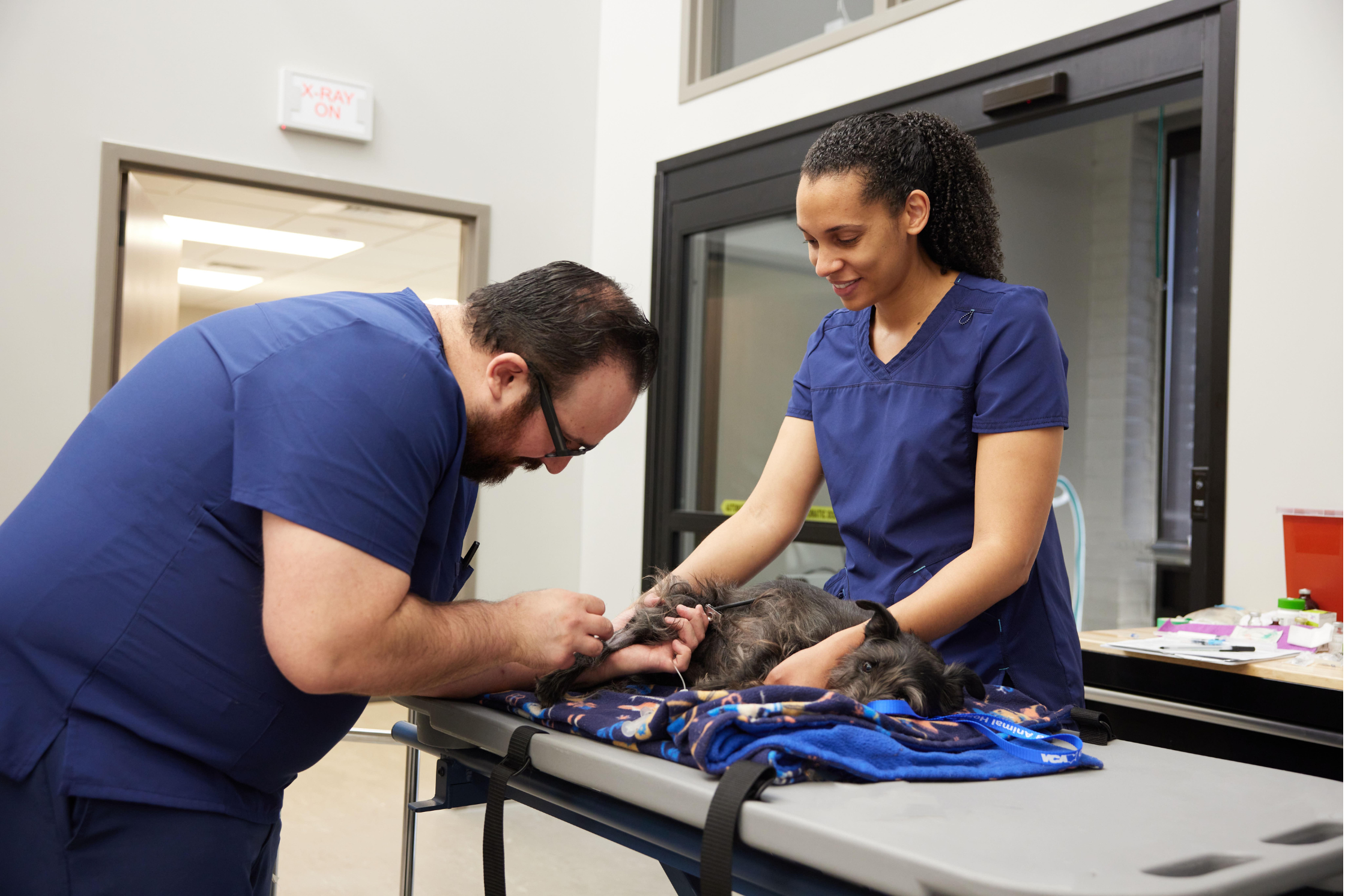
At Sage Veterinary Imaging, our trained technicians help a dog prepare for its scan.
Many pet parents worry about anesthesia, especially for older pets or those with existing conditions. At SVI, we take every precaution to make it as safe as possible. Our team uses modern anesthetic protocols tailored to your pet’s health by a team of board-certified veterinary anesthesiologists, along with continuous monitoring by experienced veterinary professionals.
While every anesthetic procedure carries some degree of risk, MRI anesthesia is typically very short, and the benefits of getting an accurate diagnosis far outweigh the risks of delaying care. You’ll receive clear pre- and post-procedure instructions so you know exactly how to prepare and what to expect afterward.
The Cost of MRI and What You’re Paying For
At Sage Veterinary Imaging, our MRI pricing is transparent and inclusive, meaning the following are all built into one straightforward price:
Safe, customized anesthesia protocols
IV fluids and continuous monitoring during the scan
The MRI scan itself performed on a 3 Tesla high-field system
Full board-certified radiologist interpretation with results shared promptly with your veterinarian
There are no surprise add-ons or consultation fees.
We also work closely with most major pet insurance providers and provide detailed invoices for quick reimbursement. In some cases, our team can even help guide you through the pre-approval process.
When you consider how much unnecessary testing or waiting can cost, both financially and emotionally, an accurate, timely MRI often ends up being the most cost-effective path forward.

Pet insurance and other financing options are available to help get your pet the best care possible.
CT vs. MRI: Which Is Right for My Pet?
Both CT and MRI are valuable imaging tools, and in many cases, they complement each other. CT scans use X-rays to create detailed images of bone, lungs, and complex structures, while MRI is unmatched for viewing soft tissues, nerves, and the brain or spinal cord.
Because SVI offers both modalities, along with ultrasound, X-ray, and nuclear medicine, our team can recommend the right tool for your pet’s specific case. This “under-one-roof” approach helps avoid repeat visits and ensures your veterinarian has the clearest diagnostic information possible.
Is It Worth It?
The short answer: yes. When it gives you real answers, MRI eliminates guesswork, often shortening the time between symptoms and treatment.
For a dog that suddenly can’t walk, MRI can pinpoint a slipped disc and determine whether surgery is needed. For a cat with a mass, it can show exactly where it’s located and whether it’s operable.
In the end, MRI provides clarity and confidence. It helps you make informed decisions and gives your pet the best possible chance for recovery.
Don’t Panic and Don’t Wait

If your veterinarian has recommended an MRI, don’t panic…and don’t wait. You have options, and your pet deserves answers delivered with expertise and compassion.
At Sage Veterinary Imaging, our mission is to make advanced imaging accessible, transparent, and stress-free for families across Texas and Utah. We work directly with your veterinarian to ensure seamless communication and the highest standard of care every step of the way.
When you understand what an MRI involves, it stops being something to fear and becomes one of the most powerful tools available to help your pet heal.
Contact us today if you’re concerned or have questions about getting an MRI for your pet.
Sources: