The Strange Neurologic Signs Every Dachshund Owner Should Know
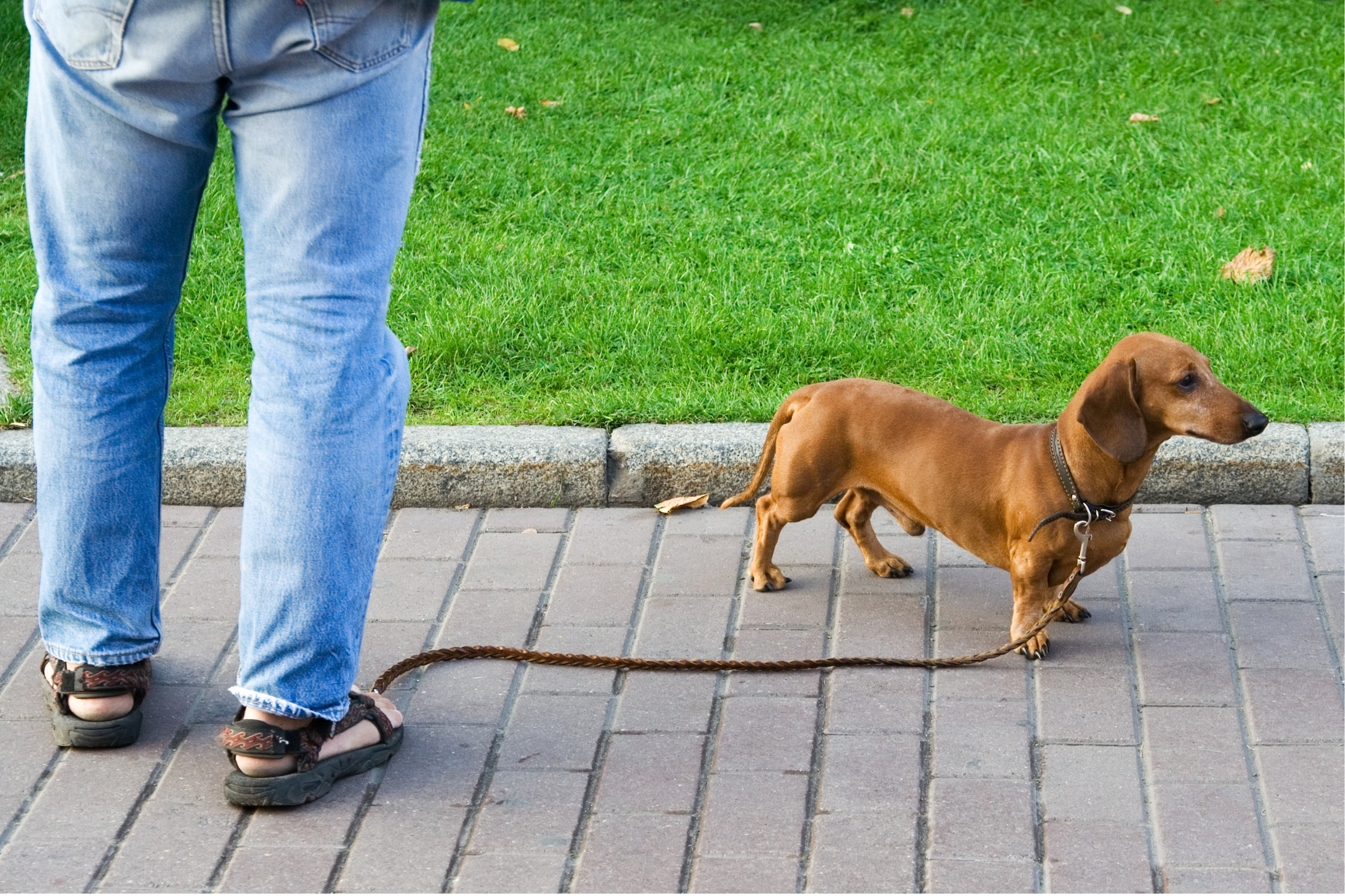
Even small changes in how your Dachshund walks or keeps up on a leash can be the first sign that something isn’t right with the spine.
Dachshunds are famous for their bold personalities, long backs, and determination to keep up with everything their families do. So when yours suddenly hesitates on the stairs, cries when picked up, or stops jumping on the couch, it’s easy to think they’re just getting older or had a minor strain.
But in this breed, small mobility changes can be early warning signs of intervertebral disc disease (IVDD), a condition that affects the spinal cord and can progress quickly without the right care.The good news is that many Dachshunds do very well when the problem is recognized early and accurately diagnosed.
Understanding what’s normal, what’s not, and when to involve your veterinarian can make a life-changing difference in comfort, mobility, and long-term quality of life.
This guide walks through the strange and often subtle neurologic signs to watch for, why they happen, and how a clear diagnosis helps you make the best decisions for your dog.
Why IVDD Is So Common in Dachshunds?
Dachshunds are genetically predisposed to intervertebral disc disease because of their long spine and short limbs, a body structure known as chondrodystrophic. In this breed, the discs that cushion the vertebrae degenerate and harden much earlier in life, sometimes as young as two to three years of age.
That early degeneration means even normal activities like jumping off furniture, running, or a small misstep can cause a disc to bulge or rupture and press on the spinal cord.
Because the spinal cord controls movement and pain sensation, this pressure leads to the neurologic signs Dachshund owners fear most: pain, weakness, wobbling, or even sudden paralysis.
Understanding this breed-specific risk is the first step in protecting long-term mobility and acting quickly when something changes.
The Warning Signs Dachshund Owners Often Miss

Dachshunds are experts at hiding pain, which is why subtle behavior changes are often the earliest neurologic warning signs.
Not every IVDD case starts with obvious pain or paralysis. Some of the most important neurologic clues look like small behavior changes that are easy to dismiss.
Your Dachshund may:
Suddenly refuse a favorite activity
Take shorter, careful steps on the back legs
Stand with the rear feet placed wider apart
Wear down the back toenails faster than usual
Seem anxious, restless, or unable to get comfortable
These changes often appear before severe weakness develops. Because they can come and go, they’re commonly mistaken for a minor strain.
In a breed with such a high risk of spinal disc disease, these “little” signs are your early opportunity to step in, get answers, and protect long-term mobility.
Why Diagnosis Matters: X-rays vs. MRI for IVDD
When a Dachshund shows signs of back pain or weakness, radiographs (X-rays) are often the first test performed. They are excellent for evaluating bone, but they cannot show the spinal cord or the disc material pressing on it. That means a dog can have significant spinal cord compression even when X-rays look normal or only mildly changed.
An MRI is different. It allows veterinarians to see the exact location of the disc rupture, the degree of spinal cord compression, and the surrounding inflammation. This information is what determines whether a dog needs strict rest, rehabilitation, or surgery, and how urgent that decision is.
Without a clear diagnosis, treatment becomes guesswork. With the right imaging, your veterinarian can recommend a targeted plan designed to protect mobility and improve long-term outcomes.
When to Call Your Veterinarian About Possible IVDD
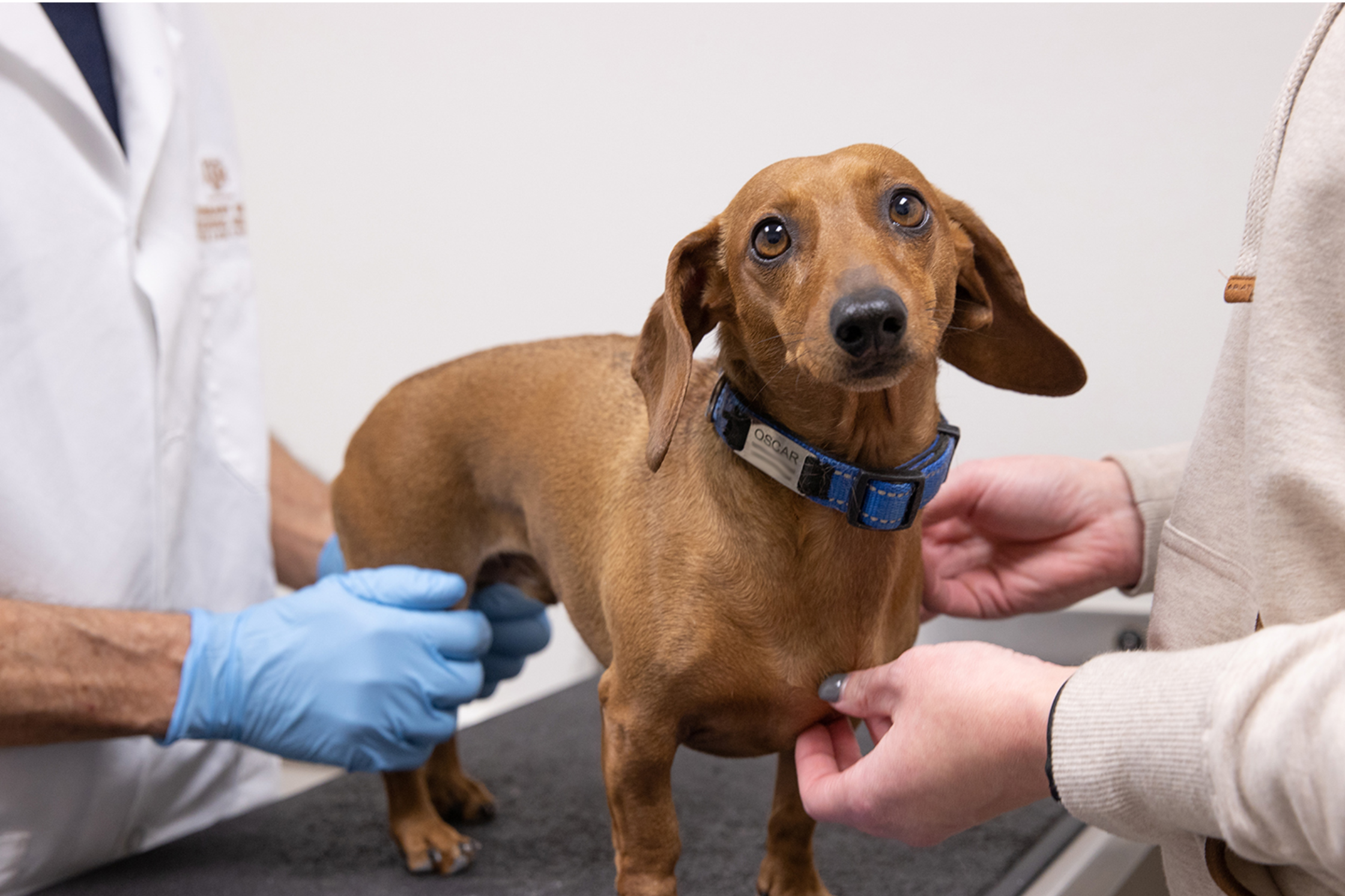
A hands-on veterinary exam is the first step in determining whether back pain is muscular, orthopedic, or affecting the spinal cord.
Contact your veterinarian promptly if your Dachshund:
Cries out with movement or when picked up
Develops a wobbly gait or weakness in the back legs
Stops walking, drags the rear limbs, or cannot stand
Has repeated episodes of back pain
Shows sudden behavior changes along with mobility issues
These signs don’t always mean surgery is needed, but they do mean the spinal cord may be involved. Early evaluation gives your dog the best chance for pain control, faster recovery, and preserved mobility.
Supporting a Long, Active Life for Your Dachshund
A diagnosis of IVDD is frightening, but it is not the end of a happy, active life. With early recognition, the right imaging, and a treatment plan tailored to the individual dog, many Dachshunds return to walking, playing, and enjoying their normal routines.
Knowing what to watch for—and acting quickly when something changes—is one of the most powerful ways you can protect your dog’s comfort, independence, and quality of life for years to come.
IVDD in Dachshunds: Frequently Asked Questions

With early recognition and the right care, many Dachshunds with IVDD return to happy, active lives.
What are the early neurologic signs of IVDD in Dachshunds?
IVDD doesn’t always start with paralysis. In many Dachshunds, the first changes are subtle and easy to miss. Because this breed is so determined to stay active, they often continue moving even when they’re in significant pain.
Early warning signs:
Hesitating to jump or climb stairs
Crying out when picked up
Shivering or holding the back tense or hunched
Becoming suddenly quiet or less playful
Stiffness when walking
As spinal cord pressure increases:
Wobbling in the back legs
Knuckling or dragging the paws
Weakness in the hind limbs
These changes are never “just a sore back” in a Dachshund. They’re signals that the spinal cord may be involved, and that early veterinary evaluation can make a critical difference.
When does a Dachshund need an MRI for back pain?
A Dachshund needs an MRI when back pain is severe, neurologic signs are present (wobbling, weakness, paralysis), symptoms keep returning, or X-rays don’t explain the problem. MRI shows the spinal cord and disc material directly, allowing veterinarians to determine the exact location and severity of compression and choose the most effective treatment.
Can X-rays diagnose IVDD in dogs?
X-rays cannot definitively diagnose IVDD because they do not show the spinal cord or the herniated disc pressing on it. They can suggest disc degeneration or rule out fractures and tumors, but an MRI is required to confirm spinal cord compression and guide treatment decisions.
Why is my Dachshund suddenly not walking?
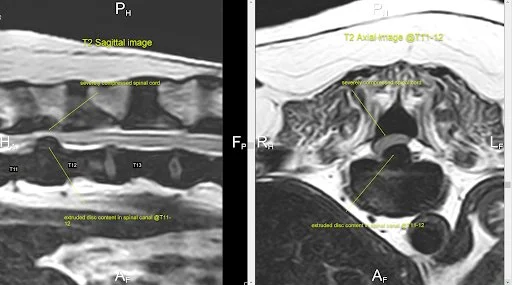
These images show a 13-year-old Dachshund with severe hind limb weakness that began after a traumatic jump. When medical management failed, surgery revealed a chronic disc extrusion causing marked spinal cord compression, explaining the profound weakness without complete paralysis. The patient began improving by the second postoperative day.
Sudden inability to walk in a Dachshund is most commonly caused by a disc herniation compressing the spinal cord. This can occur during normal activity and may progress rapidly. It is a medical emergency, and immediate veterinary evaluation greatly improves the chances of recovery.
Can a Dachshund recover from IVDD without surgery?
Many Dachshunds with mild to moderate IVDD improve with strict rest, pain control, and rehabilitation. However, dogs with significant weakness or paralysis often require surgery for the best outcome. The right approach depends on the severity and location of spinal cord compression, which is determined with advanced imaging.
Is shaking a sign of back pain in Dachshunds?
Yes. Shaking or trembling is a common sign of pain in Dachshunds with IVDD. It often occurs along with a tense abdomen, reluctance to move, or a hunched posture. Because this breed tends to hide discomfort, trembling may be one of the earliest visible warning signs.
How fast does IVDD progress in Dachshunds?
IVDD can progress over days, but in some dogs it worsens within hours. A Dachshund may go from back pain to weakness or paralysis very quickly once the spinal cord becomes compressed. Early veterinary care is critical because treatment success is closely tied to how soon it begins.
Why Deep Pain Sensation Is So Time-Sensitive in IVDD
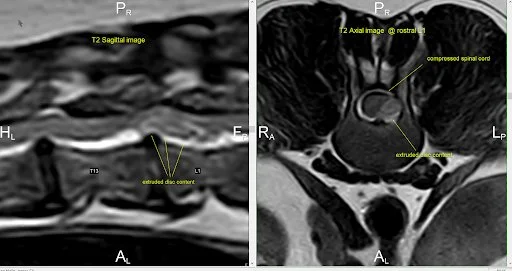
These images are from an 11-year-old Dachshund that developed significant hind limb weakness two days after the onset of back pain. The disc material appears less hypointense (lighter), consistent with an acute extrusion that was easily removed at surgery. The patient made a full recovery.
One of the most important things your veterinarian evaluates during a neurologic exam is whether your Dachshund still has deep pain sensation in the back legs and tail.
Deep pain is the last function lost when the spinal cord is severely compressed.
If it is still present, the prognosis for walking again, especially with surgery, is dramatically better.
If deep pain is lost, the situation becomes far more urgent.
This is because:
The nerve pathways that carry deep pain are the most resistant to pressure
Their loss indicates a severe, advanced spinal cord injury
The success rate of surgery drops significantly once deep pain is gone
In other words, this is not just about whether a dog can walk — it is about whether the spinal cord is still capable of recovery.
Why Timing Matters with IVDD
A Dachshund that:
Cannot walk
Has become suddenly paralyzed
Or is dragging the back legs
needs immediate veterinary evaluation, because the window for the best surgical outcome is closely tied to how long deep pain sensation is absent.
Dogs that still have deep pain at the time of surgery have a high likelihood of regaining mobility.
Once deep pain has been lost for a period of time, even the most advanced surgery cannot always reverse the damage, because the spinal cord injury has become too severe.
This is why veterinarians consider these cases true neurologic emergencies.
The Take-Home Message for Dachshund Owners
If your Dachshund suddenly cannot stand or walk:
Do not wait to see if it improves
Do not try additional rest at home
Seek veterinary care immediately
Acting quickly can be the difference between:
Walking again, and
Permanent paralysis
And that decision point often comes down to one critical factor: whether deep pain sensation is still present.
IVDD in Dachshunds is frightening, but it is also one of the most time-sensitive and treatable neurologic conditions when recognized early. Subtle changes in movement, posture, or behavior are your first opportunity to step in.
With a prompt veterinary exam, the right imaging, and a plan based on an accurate diagnosis, many dogs return to comfortable, active lives. Acting quickly doesn’t just relieve pain, it protects your Dachshund’s ability to walk, play, and stay independent for years to come.